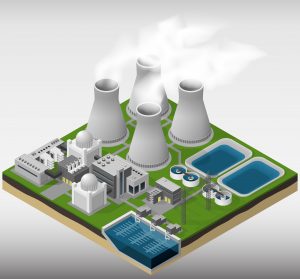
 Last week, the British government gave the go-ahead to Hinkley Point C, the U.K.’s first new nuclear power station in 20 years.
In the announcement, Greg Clark, Secretary of State for Business, Energy and Industrial Strategy, said nuclear power is an important element of Britain’s “future low-carbon energy security.”
We agree. A decision to move forward on this facility is good news. Once it’s online, the plant is expected to provide 7% of the U.K.’s energy – enough to power 6 million homes. The project is expected to provide 26,000 jobs at a cost of 18 billion pounds, or not quite $24 billion.
The new plant will go in near two existing sites, one of which has already been decommissioned. This third facility is scheduled to be completed in 2025.
The future of the project was uncertain after new Prime Minister Theresa May’s government said in July that they needed to review the plans for the deal.
Critics have expressed concern about the project’s financing. The plant is being constructed and subsequently operated by EDF Energy, a French utility that is mostly state-owned, and China is financing about one-third of the project. To counter this criticism, the announcement that the deal would move forward also referred to new policies that would address the British government’s “approach to the ownership and control of critical infrastructure.”
The technology EDF is using on Hinkley Point C – a newer design known as EPR (European pressurized reactor) – is also under scrutiny. Two previous EPR projects are behind schedule and over budget, and the technology itself has not yet proven reliable.
There is no doubt the project carries a significant amount of risk, as any innovative technology will. If properly evaluated, the previous projects should present the Hinkley Point C project team with crucial insights and lessons they can build upon for their approach.
